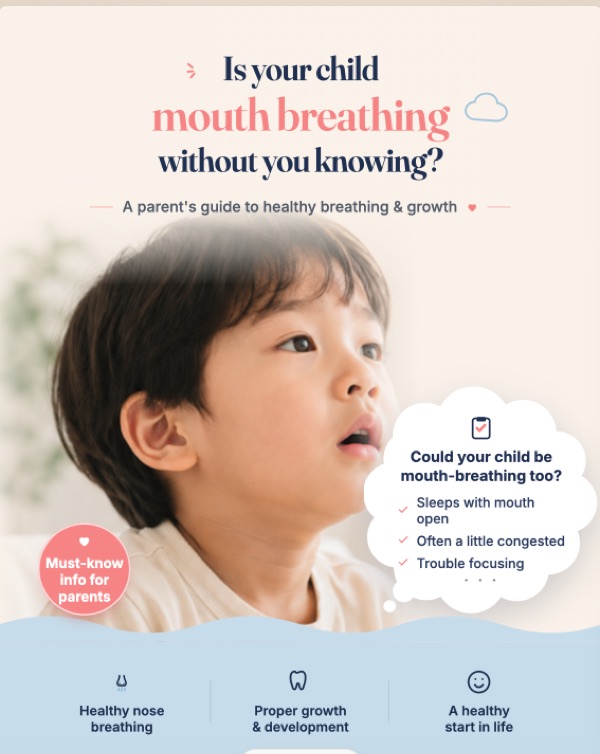
Many parents pass off the early signs of mouth breathing as simple habits. Here are 9 signs that can be related to sleep, focus, oral health, and growth development.
Enter your email — we'll send your reading link instantly.
Long-term mouth breathing in children may be related to a range of developmental and oral-health observations.
Disrupted, fragmented sleep cycles.
Audible breathing during sleep.
Reduced saliva and oral protection.
Lower saliva flow can mean more decay.
May relate to long-face pattern and narrow palate in some children.
Less room for permanent teeth.
Daytime fatigue and reduced focus.
Resting tongue posture is one important factor in jaw growth — covered in depth.
The full checklist your child may show. Three or more? It may be worth a closer look.
A practical parent guide written by a Registered Dental Hygienist.
Two-part checklist (4 + 5 signs). If your child shows 3 or more, professional consultation is recommended.
An actual clinical case showing how habit change reshaped growth over time.
Why not every child reacts the same way — and why regular observation matters during growth.
Why resting tongue posture is one of the most underrated drivers of facial development.
How mouth breathing can affect tooth alignment, and how Myofunctional Therapy (MFT) supports healthy function.
Orthodontist · myofunctional therapist · ENT working together. Clear thresholds for chronic mouth breathing, snoring, speech and alignment concerns.

“The checklist helped me realize my son's snoring wasn't just a cute quirk. We got him assessed and the change in his sleep has been huge.”
“Easy to read, no scary jargon. I shared it with my daughter's teacher and our family dentist — everyone appreciated it.”
“I'd been told ‘he'll grow out of it’ for years. This checklist gave me the language to ask better questions and finally get real answers.”
Talk to our team about your child's breathing habits — we're here to help.
Online Booking →Early observation may help guide healthier habits during growth — for sleep, focus, and oral health.
Prefer to talk first? Book a Consultation → · 672-855-2875
Aviator Dental Hygiene offers screening of oral and breathing habits for growing children.